EU report: E-waste could cover more than half of Europe’s demand for critical raw materials
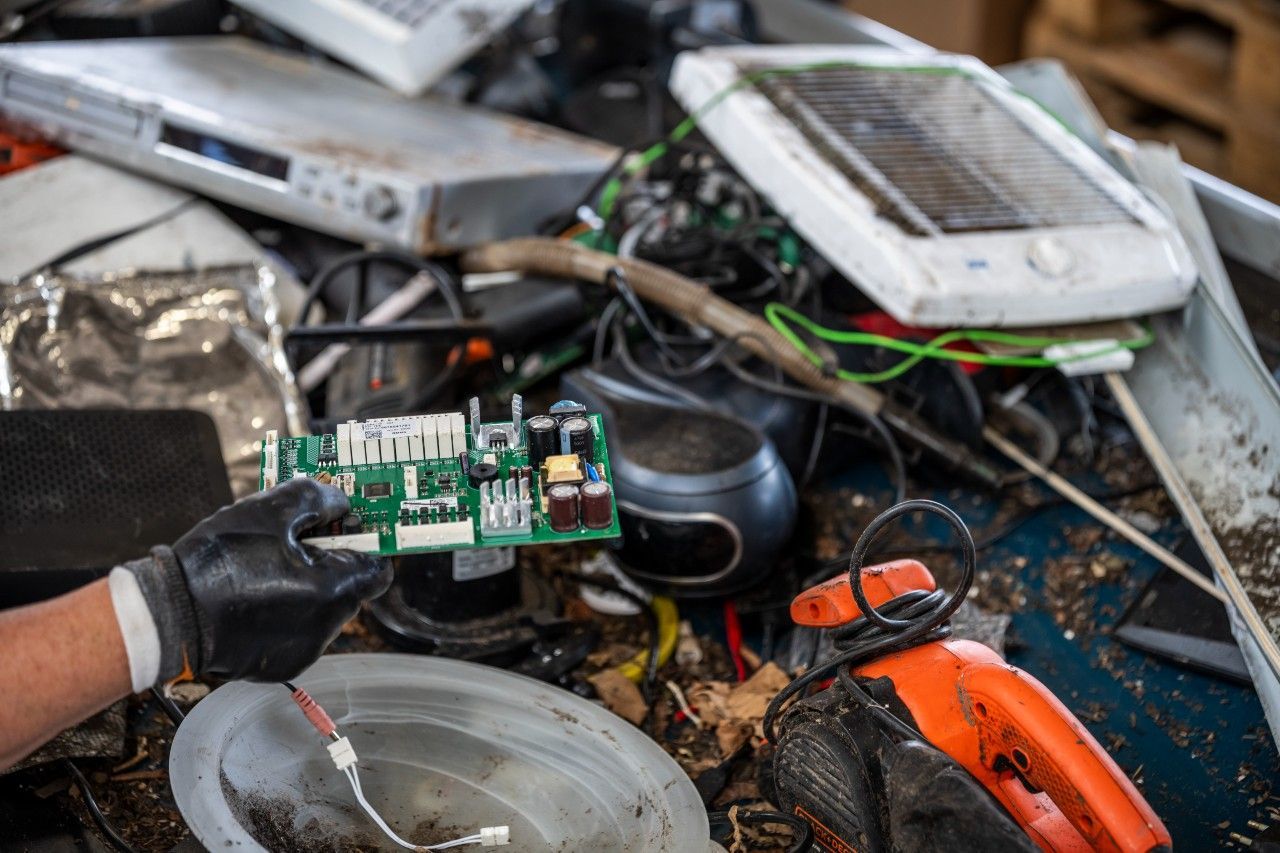
Electrical and electronic waste is increasingly becoming a central element of the EU’s raw materials strategy. With the EU’s Critical Raw Materials Act and a growing political focus on supply security in an increasingly uncertain global economy, the use of secondary raw materials from waste has become a key area in Europe’s green transition.
FutuRaM is an EU-funded research project that investigates how secondary raw materials can be recovered more efficiently from European waste streams.
The project is carried out by a consortium of research institutions, technical experts, and industry stakeholders across Europe, with the aim of improving the evidence base for EU raw materials and waste policy.
The analysis maps the quantity and potential of critical raw materials in key waste streams such as waste electrical and electronic equipment (WEEE), batteries, end-of-life vehicles, wind turbines, and construction and demolition waste.
Based on scenarios for developments towards 2050, the project assesses how large a share of the EU’s demand for critical materials could potentially be met through increased collection, sorting, and recycling.
For stakeholders in producer responsibility and electronic waste management, the results point to a clear link between effective waste management and Europe’s future raw material supply.
The FutuRaM analysis highlights that large volumes of critical materials already exist in European waste streams, including:
The overall potential is so significant that, according to the scenarios, waste in the EU could cover around 50–56% of the demand for critical raw materials by 2050.
E-waste is identified as one of the most important sources of secondary raw materials, including metals such as copper, gold, silver, palladium, and rare earth elements.
At the same time, the analysis highlights that a significant share of these materials is currently lost because waste is not properly collected or recycled.
This is particularly true for smaller electronic products and components, where material value is high but collection rates remain challenging.
According to the analysis, the EU could potentially recover between 4.1 and 5.7 million tonnes of critical raw materials annually by 2050.
If realised, this potential could contribute to:
The findings underline the importance of effective and well-functioning producer responsibility systems such as the WEEE Directive.
For producers and producer responsibility organisations, this implies:
The analysis also highlights that improvements in collection and recycling are among the most direct ways to increase Europe’s access to critical raw materials.
The report also identifies several structural challenges, including:
These factors directly affect the effectiveness of producer responsibility schemes and the ability to realise the full circular potential.
For Elretur’s members, the analysis highlights an important development: e-waste is increasingly becoming a strategic source of critical raw materials in the EU.
This means that requirements for collection, documentation, and treatment quality are expected to become even more important in the coming years, both in relation to environmental targets and the EU’s raw material security.
For Elretur and its members, the value contained in electronic waste is not new. However, the report provides an important perspective on the extent to which system efficiency affects Europe’s overall raw material security.
It also highlights that developments in EU producer responsibility and waste regulation are increasingly not only about environmental protection and waste management, but also about strategic access to critical materials. As a result, stable, harmonised, and well-functioning collection systems under producer responsibility schemes will become even more essential in the years ahead.