Incorrect sorting of ‘fast tech’ poses a major challenge
Halloween has just passed, Black Friday is already under way, and Christmas is just around the corner. What these three occasions have in common is that consumers purchase large quantities of electronics.
While products such as mobile phones and laptops are typically associated with electronics, developments in recent years mean that we need to understand electronics in a much broader sense than before.
Electronic components have found their way into almost everything, and inexpensive electronic products are readily available in supermarkets, DIY stores and lifestyle retailers specialising in affordable, fun or useful everyday products.
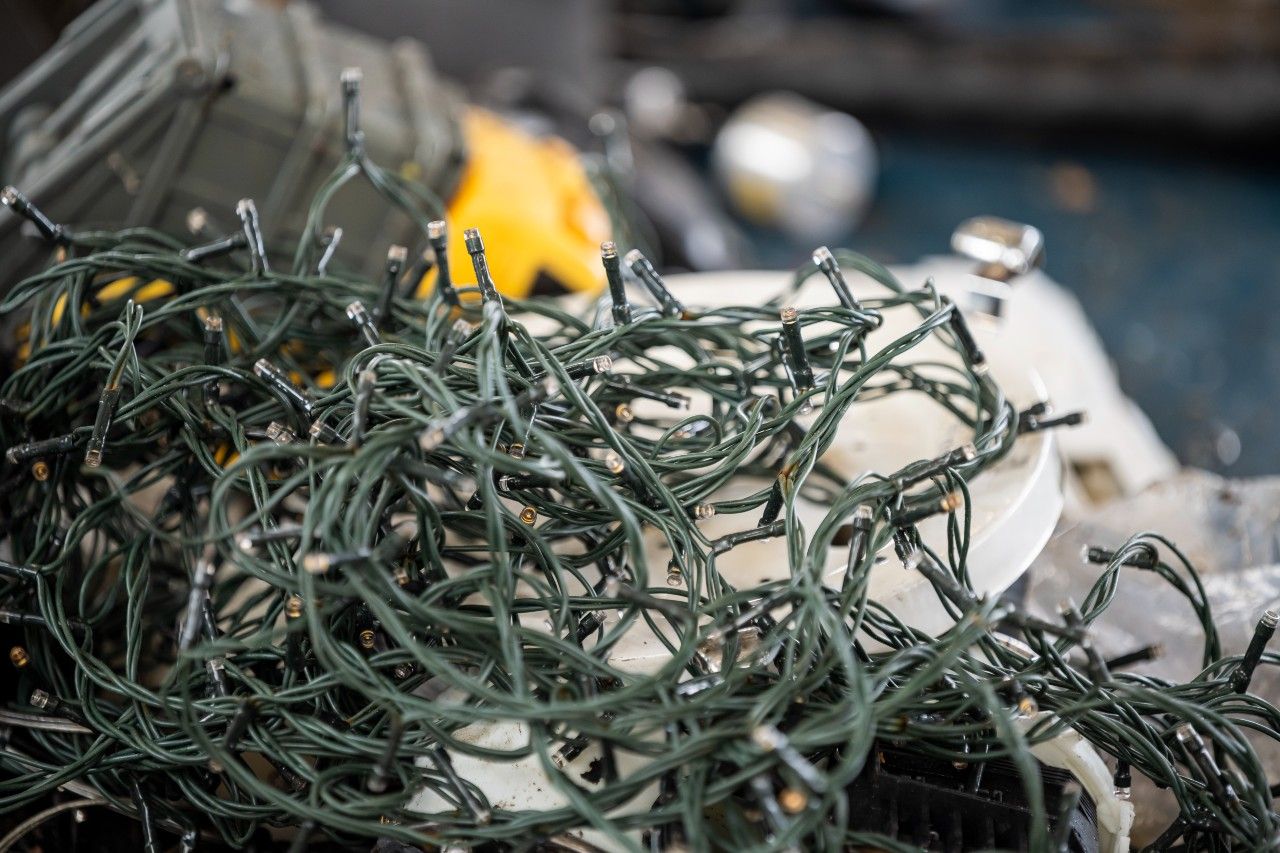
This new category of electronics has been dubbed ‘fast tech’. Perhaps the most recognisable examples of fast tech products are fairy lights and battery-powered tea lights and candles, which have become commonplace in households.
Unfortunately, a new pan-European survey reveals that while nearly nine out of ten Europeans own at least one fast tech product, consumers are falling short when it comes to disposing of these products correctly so that they can be reused or recycled.
29% keep them in a drawer, 23% admit to having disposed of fast tech in their general waste, and 21% have put it in their plastic waste. Only 27% report having taken their fast tech products to a recycling centre (source: WEEE Forum, Fast Tech Consumer Survey 2026).
“Electronic waste is the fastest-growing waste stream in the world. With the emergence of fast tech, that wave has turned into a tsunami. This is particularly problematic when products are not correctly sorted as electronic waste and handed in for reuse or recycling. Failure to return products or sort them correctly means that valuable natural resources, such as rare metals, are not recovered. As a result, we are already beginning to run out of certain critical metals. At the same time, incorrect disposal significantly increases the risk of spontaneous fires involving electronics and batteries,” says Poul Poulsen, Acting CEO of Retur.
Denmark’s largest plastic waste sorting facility, ReSource Denmark, is located in Esbjerg. It has an annual processing capacity of no less than 160,000 tonnes of plastic waste, with the aim of ensuring that as much of it as possible is recycled.
At ReSource Denmark, the survey findings reflect their own experience: consumers are incorrectly sorting electronics and disposing of them alongside plastic waste on a large scale.
In the first ten months of this year alone, the facility recorded 100 tonnes of incorrectly sorted electronics, with the actual figure believed to be significantly higher. The presence of electronics in plastic waste prevents the affected plastic from being recycled, making incorrect sorting on this scale a major problem. In addition, incorrectly sorted electronics frequently trigger fire alarms.
“Plastic burns readily, and electronic products containing batteries can spontaneously ignite. It is quite literally a highly combustible combination. Although the facility’s design and safety measures account for this issue, it is obviously a risk we would rather avoid. Particularly because it also compromises our efforts to recycle as much plastic as possible. Even though electronic products are often made predominantly of plastic, they must be handed in as electronic waste. We will ensure that the plastic is recycled later in the process – but the electronic components and batteries need to be removed first,” says Helle Vingolf, CEO of ReSource Denmark.
The world is drowning in electronic waste. E-waste is the world’s fastest-growing waste stream, yet only 22% is documented as being collected and reused or recycled.
According to the United Nations, 44 million tonnes of electronic waste were generated in 2014. By 2022, that figure had risen to 62 million tonnes, and by 2030, the volume is expected to reach 82 million tonnes.
Denmark makes a considerable contribution to this waste stream, with the average Dane discarding 25 kg of electronic waste every year. This is 40% above the EU average and 210% above the global average.
“Denmark has the third-highest consumption of electronics in the world. When you rank among the top three in a context like this, you also have a significant responsibility to ensure that discarded electronics are sorted correctly so that they can be reused or, where this is not possible, that the natural resources they contain can be recovered through recycling,” says Poul Poulsen.
Retur’s producer responsibility organisation, Elretur, handles more than 80% of all electronic waste handed in at Danish recycling centres. Its operations aim to ensure that products are reused or their materials recycled wherever possible.
Together with HJHansen Recycling Group, Elretur has established Denmark’s first dedicated electronics reuse facility, Electronic Reuse and Recycling, which assesses discarded electronics with a view to repairing products and returning them to the market.
“We need to become much better at seeing discarded electronics as a resource rather than waste. At Elretur, we are actively working to ensure that as many electronic products as possible are given a new lease of life through reuse before being sent for recycling. With our Electronic Reuse and Recycling facility, we have taken an important step in that direction. It is about both extending product lifespans and preserving valuable raw materials for which demand is growing. At a time when Europe is heavily dependent on imports of critical raw materials, improving reuse and recycling also makes an important contribution to Europe’s security of supply,” says Poul Poulsen.
Fast tech refers to electronic products characterised by their low prices, short expected lifespans or periods of use, and their tendency to be purchased on impulse. Examples include small electric fans and battery-powered tea lights. Fast tech is often compared to the fashion industry’s concept of ‘fast fashion’.
A new survey conducted among 10,245 adults across 12 European countries reveals that:
Source: WEEE Forum, Fast Tech Consumer Survey 2026.