From complex legislation to data-driven operations: HiFi Klubben's scalable model for producer responsibility
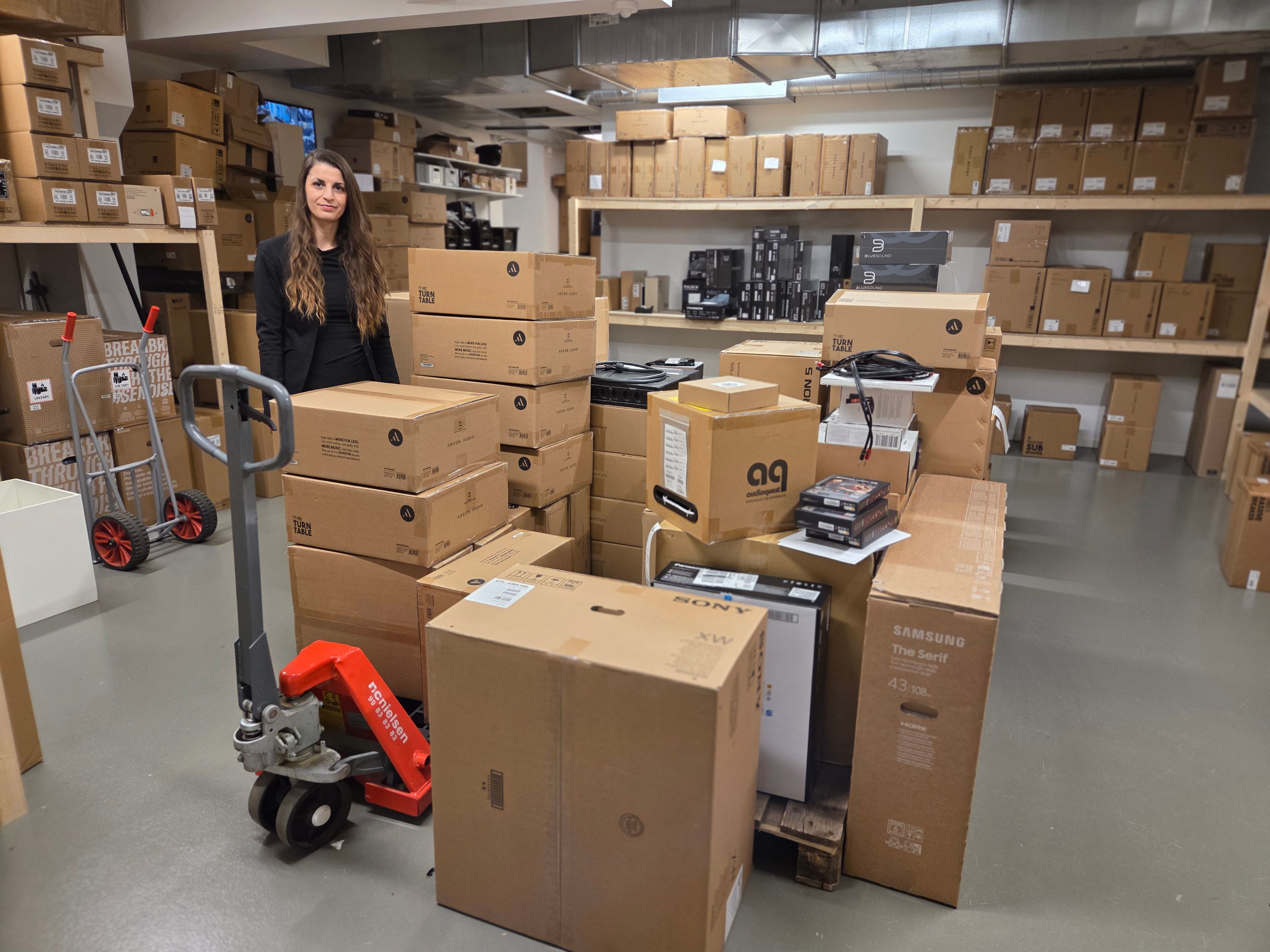
HiFi Klubben is Europe's largest specialist chain in high-quality HiFi with over 100 physical stores and five national online shops.
The product range is broad, and each product typically has several types of packaging around it. HiFi Klubben already has experience with producer responsibility for electronics and batteries, but when packaging became the company's third producer responsibility in 2025, the business faced a task that quickly proved more complex than before.
"There is of course packaging around all electronics, and sometimes several types of packaging for each product. Cardboard, plastic, foam and whatever else there might be. And it adds up," says Sona Harutunian, project manager at HiFi Klubben.
With a background in accountancy and ESG reporting as a parallel track, Sona Harutunian was given responsibility for designing and implementing the framework for HiFi Klubben's handling of the new producer responsibility.
When she set about the task, it quickly became clear that producer responsibility is not only about reporting. First, an overview had to be established.
"HiFi Klubben has a very large number of suppliers. We needed to reach them to obtain the information, and afterwards the volume of data we received had to be managed," she says.
The initial ambition was to obtain complete data on all products. But it quickly became apparent that not all the necessary information could be sourced.
"There are some suppliers we have not been able to get data out of. In those cases, we have had to estimate based on our best knowledge of the products. During the collection process we also reached the realisation that if we were going to get there, we had to stop chasing the last piece of data," says Sona Harutunian.
The solution was an 80/20 approach, focusing on the products and packaging types that accounted for the largest share of turnover.
The solution was a centralised data model and a Power BI report that automatically links packaging fractions with sales data. This has transformed a manual process into audit-ready, data-driven reporting.
"The end result is that reporting is now relatively straightforward. Packaging data for each product is multiplied by the number of units sold in the relevant month, and the Finance team simply reports from the totals set out in the Power BI report. The only thing we are really missing now is a more automated update of packaging data," says Sona Harutunian.
Retur was already part of HiFi Klubben's setup through the producer responsibility for electronics and batteries.
In the early phase, another producer responsibility organisation was briefly considered, as the area was new and unclear.
But when it became clear that Retur also handled packaging, HiFi Klubben made a strategic decision: all producer responsibilities should be consolidated in one place.
"Retur has been a strategic partner rather than merely a supplier throughout our entire compliance process," says Sona Harutunian.
Particularly during the eighteen-month start-up period, Retur became an ongoing collaborator - not only on questions of legislation and interpretation, but also in concrete situations where something needed to be resolved there and then.
Webinars provided insight into rules that were still being developed.
Newsletters made it possible to keep up with changes. Tools such as the Self-Monitoring Form served as practical working instruments.
But what stands out most clearly is the experience of being taken seriously.
"I had imagined that because Retur is such a large organisation, we would simply become one of many. But whenever I have called, Member Services has been very helpful in getting to grips with our specific situation - whether it was a minor issue or a larger question."

The producer responsibility for packaging means that businesses placing packaging on the market also pay for and organise the handling of the resulting waste. The scheme is at the same time a governance tool designed to create incentives for more environmentally considerate packaging.
HiFi Klubben does not, however, produce the goods itself. This means that direct influence over packaging design is limited. Even so, Sona Harutunian regards producer responsibility as an important development.
"I think it is a good thing that attention is being directed at how much waste we actually generate. In the longer term, the effect lies in the fact that it does not only affect individual businesses, but the entire market. In that way, businesses are compelled to rethink packaging."

When Sona Harutunian looks back on the process, her advice to other businesses is clear:
1: Start early
The biggest task is not the reporting itself, but the work leading up to it: understanding the rules, contacting suppliers, collecting data and prioritising when everything cannot be in place from day one.
2: Allocate resources - especially in the beginning
Someone needs to drive the process, even when the work is manual, suppliers are not responding and you have to work with estimates.
3: Accept the 80/20 approach
Don't let the pursuit of the last 5% of data block overall progress. Identify the suppliers and packaging types that account for the majority of volume, and start there. It is better to have a solid data model for 80% of your product range and estimate the rest, than to grind to a halt in the attempt to be 100% perfect from day one.