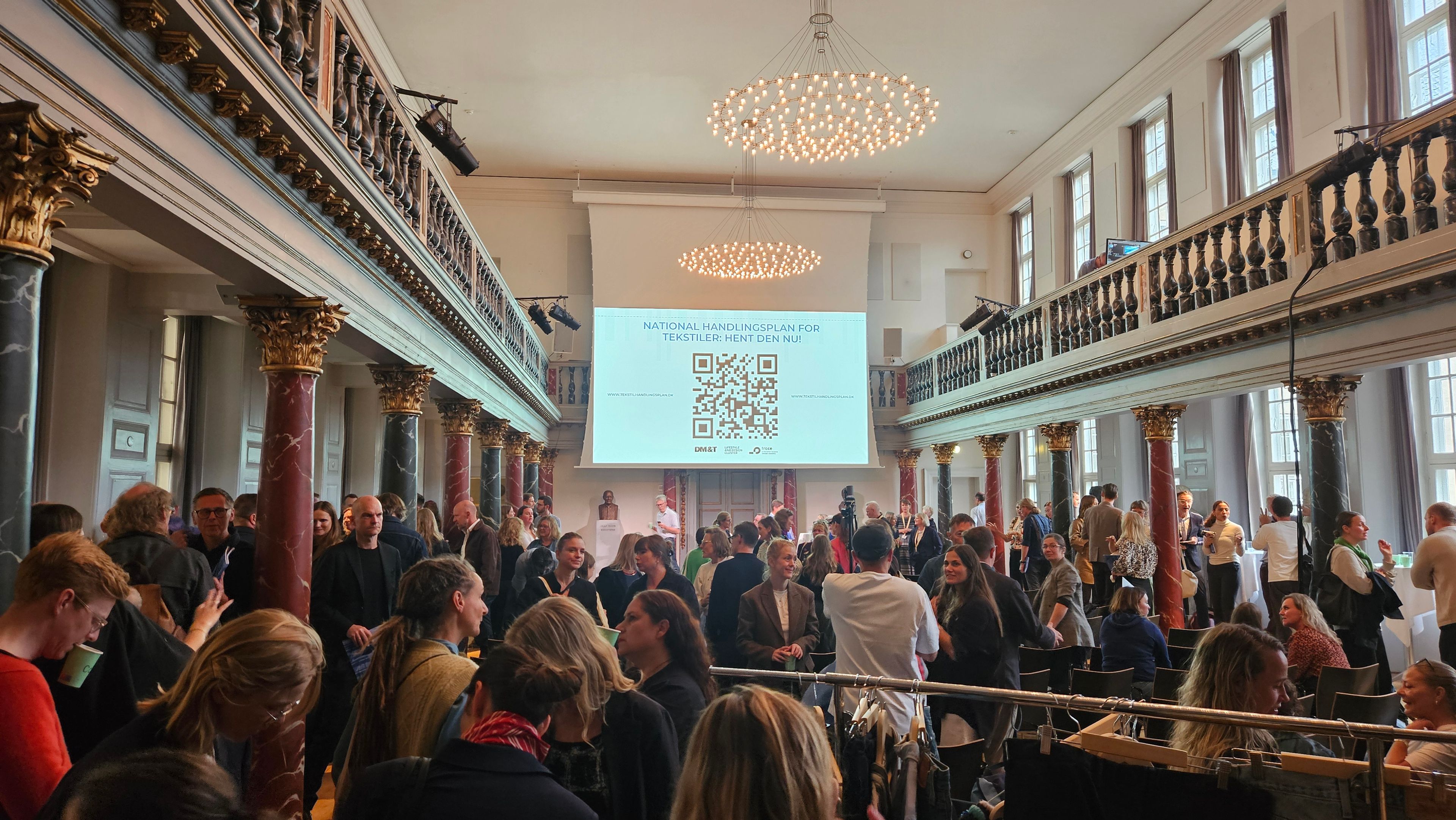
National action plan to set the direction for the future of the textile sector
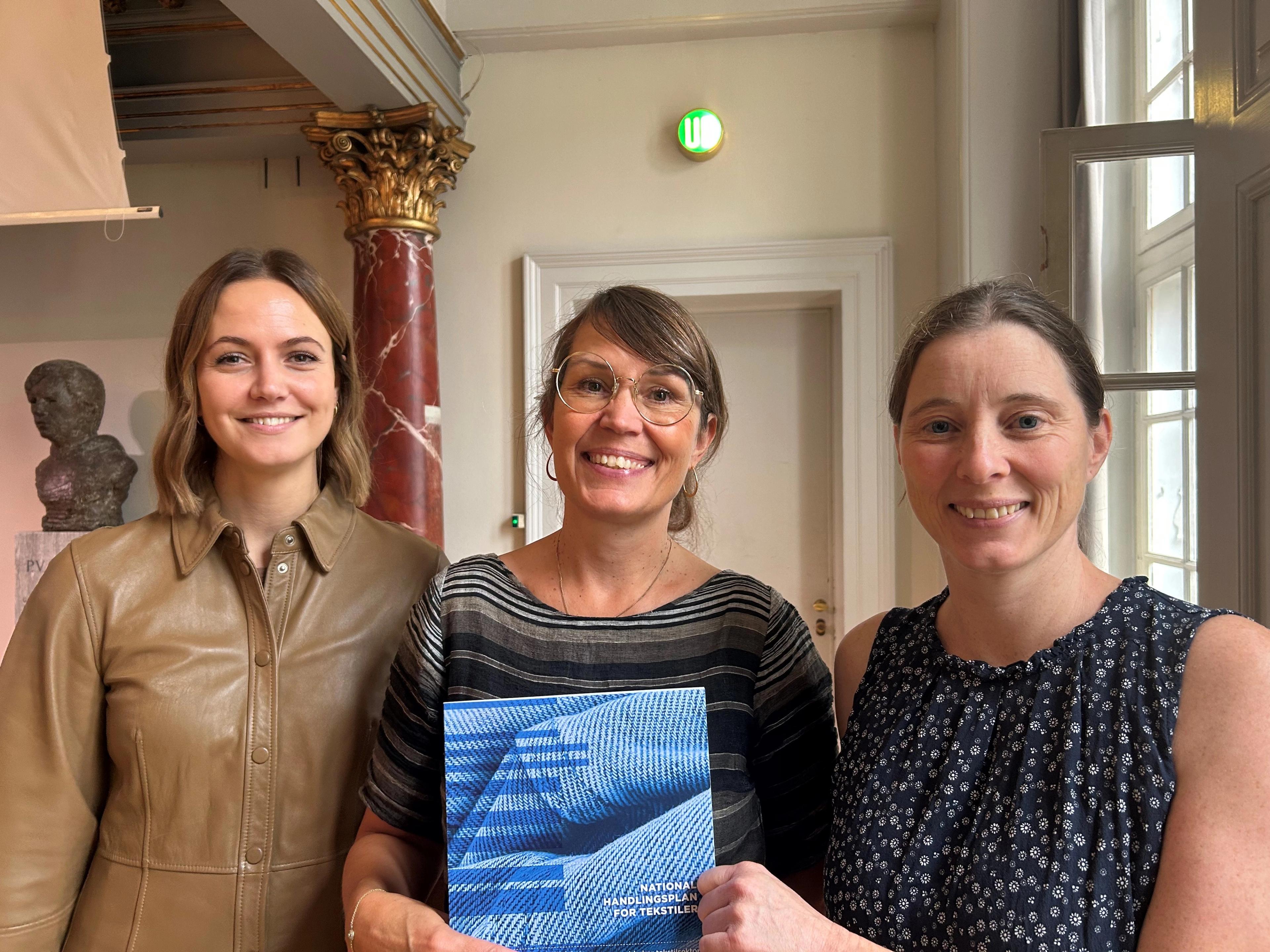
“I love clothes, but I don’t love our clothing culture.”
Those were the words of Minister for Climate, Energy and Utilities Samira Nawa when she welcomed attendees to the launch of Denmark’s national action plan for textiles on Thursday, before a packed audience at the National Museum of Denmark.
In front of her were representatives from virtually every part of the value chain that the action plan aims to transform: the fashion industry and textile producers, industry associations, NGOs, municipalities, reuse, recycling and waste management operators, researchers and innovation communities.
Collaboration across the value chain was a recurring theme throughout the launch.
“We need to move into the future with new habits, a new mindset and a new culture, and we can only do that together,” said Samira Nawa.
The ambition is not only to change how textiles are produced. The action plan aims to address the entire textile value chain and create better conditions for textiles to be used for longer, circulate more widely and, to a greater extent, be reused and recycled.
“We need to get more out of fewer textiles,” said Marie Busck, Chair of the Steering Committee for the National Action Plan for Textiles and Chief Sustainability Officer at Dansk Mode & Textil.
The action plan brings together the efforts in three tracks and nine concrete initiatives.
The first track focuses on businesses and aims, among other things, to help small and medium-sized enterprises in particular navigate new EU requirements and strengthen their work with circular business models.
The second track focuses on the infrastructure needed to make the circular economy work in practice.
This includes developing a clearer picture of textile flows in Denmark, examining the need for sorting and treatment capacity, and working on the implementation of the upcoming extended producer responsibility scheme.
The third track focuses on extending the lifespan of textiles and on repair, with initiatives aimed at ensuring that textiles are used for longer and kept in circulation to a greater extent.
The action plan thus spans the requirements and business models companies face, the physical infrastructure needed to support circularity, and what happens to textiles once they reach consumers.

One of the action plan’s nine initiatives focuses directly on the upcoming extended producer responsibility scheme for textiles.
“I will be particularly interested in following the analysis of textile waste flows and the support that will be developed, especially for SMEs, to help them comply with the new rules, as this could be highly beneficial to our members,” says Camilla Jonassen, Subject Matter Expert for Textiles at Retur.
The action plan has been developed on the assumption that Danish regulations on extended producer responsibility will be introduced in 2027, with the scheme taking effect in spring 2028.
However, the framework for extended producer responsibility will not be determined by the action plan. Instead, its role will be to support implementation once the political framework is in place.
“The action plan is intended to support the implementation that will in any case need to take place around extended producer responsibility. Certain political requirements have been established, and once we have the framework in place, we will incorporate it into the action plan,” said Marie Busck during a final Q&A session.
According to the plan, this will include establishing a dialogue forum bringing together producers, municipalities, the waste and reuse sector, authorities and other relevant stakeholders. Producer responsibility organisations are also among the stakeholders identified in the action plan as partners in the initiative.
The dialogue forum will be able to address issues including collection and communication models, the economic implications of extended producer responsibility, the need for sorting and treatment capacity, and common standards for sorting, reporting and traceability.
In this way, extended producer responsibility will be linked to several of the practical questions that the textile sector will need to address in the years ahead.
As part of the action plan, the existing mapping of textile flows in Denmark will be updated. One of the aims is to create a stronger data foundation and more consistent methods for tracking textiles through the system.
At the same time, the infrastructure needed for the future handling of textiles will be examined.
This includes capacity for fine sorting, repair, preparation for reuse and recycling, as well as the logistics and end markets needed to make the system work.
The analysis will also examine which textile flows make sense to handle in Denmark and where Nordic or European solutions may be more appropriate.
These are questions that will have direct implications as the introduction of extended producer responsibility approaches. The action plan itself points out that, with the upcoming extended producer responsibility scheme, larger volumes of textiles will need to be collected, sorted and treated more systematically.
“Ultimately, we will be responsible for ensuring that the textiles are treated, which is why this particular part of the action plan is highly valuable to Tekstilretur. At the same time, I expect it will help bring us closer to assessing what extended producer responsibility will cost,” says Camilla Jonassen.
The action plan also includes initiatives designed to prepare businesses for the regulation that is on the way.
Among other things, so-called EU readiness packages will be developed, particularly for small and medium-sized enterprises. They will help businesses navigate requirements arising from, among other things, ecodesign rules and the upcoming extended producer responsibility scheme, as well as requirements relating to documentation and traceability.
For businesses that will be subject to extended producer responsibility, 2028 is therefore not the starting point.
The coming years will be the period in which both the rules and the system needed to make extended producer responsibility work in practice will take shape.
“Getting started is never easy, and we know from experience that navigating new rules can be challenging for smaller businesses. We will therefore contribute our experience to help make these readiness packages as useful as possible for our members, so that compliance does not have to be more complicated than necessary,” says Camilla Jonassen.
Work on the action plan began in 2024. But although the launch at the National Museum of Denmark marked the culmination of two years of developing the plan, Marie Busck stressed that its real value will only become apparent through the work that now follows.
“The national action plan is not a result in itself, even though it may feel that way after two years. It should be judged by the results it delivers.”
Tekstilretur will actively contribute to the implementation of the action plan.