New Report on Fast Tech: The Throwaway Culture Has Taken Over Electronics
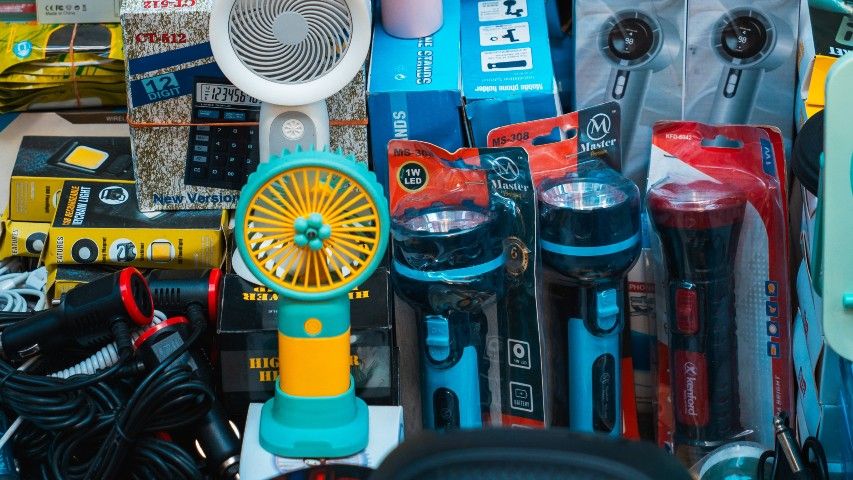
A small desk fan. String lights for a party. A charger that can easily be replaced with a new one.
Small electronic products have become so cheap and readily available that we often buy them without giving it much thought. And when they break or are no longer needed, it is easy to leave them in a drawer or throw them away with household waste.
The phenomenon has been dubbed Fast Tech, drawing a parallel with the fashion industry's Fast Fashion, where low prices, frequent purchases and short product lifespans characterise consumption.
And Fast Tech has become part of everyday life for most Europeans.
This is revealed by a new survey commissioned by the WEEE Forum, involving 10,245 consumers across 12 European countries, to mark International E-Waste Day on 14 October.
“Fast Tech is the blind spot of the e-waste world,” says Pascal Leroy, Director General of the WEEE Forum, adding:
“Their low price doesn’t mean they have no environmental cost. We need them to be collected and recycled when they’re no longer in use.”

The WEEE Forum is an international association of 50 producer responsibility organisations (PROs), including Elretur, Retur's scheme for electrical and electronic equipment, working together to improve the collection, treatment and recycling of e-waste.
The organisation is also behind International E-Waste Day, which raises awareness of the world's fastest-growing waste stream, electronic waste, every year.
The WEEE Forum survey reveals that 87% of respondents own at least one Fast Tech product, and 78% have purchased one within the past year.
Yet these are not necessarily products that consumers expect to use for many years. In fact, 46% expect Fast Tech products to have shorter lifespans than more expensive alternatives. At the same time, 58% of respondents can recall at least one product they used for no more than six months.
Despite these expectations of shorter lifespans, 61% are generally satisfied with their Fast Tech products, and 59% say they would replace a broken Fast Tech product with another inexpensive alternative.
“It is striking how we are increasingly accepting electronics as something that can quickly be replaced. Even though these products are small and inexpensive, manufacturing them still requires considerable amounts of raw materials and resources. And when we are finished with them, they should ideally be taken to recycling centres so that the materials can be brought back into circulation,” says Poul Poulsen, Acting Managing Director of Retur.

Unfortunately, the survey shows that far from all electronic products make their way to reuse or recycling.
29% of surveyed Fast Tech buyers say they keep products they no longer use at home. Meanwhile, 23% report having disposed of Fast Tech in household waste, while 21% have placed it in plastic recycling bins.
“This is a challenge because even small electronic products contain materials that can be recycled if they are collected and treated correctly. They can also pose a fire risk, particularly if the products contain batteries,” says Poul Poulsen.
When electronics end up in the wrong waste stream, valuable materials risk being lost. And when products are left sitting in drawers and cupboards, their materials remain unavailable for recycling.
Every year, International E-Waste Day raises awareness of electronic waste and the importance of collecting and recycling electrical and electronic products at the end of their useful lives.
This year's focus on Fast Tech aims to remind consumers that an electronic product does not stop being electronics simply because it is small, inexpensive or quickly replaced.
Although an individual charger, string of lights or gadget may not seem like much, together these small products can add up to a significant amount of electronics that may never make their way to recycling.
“We need to get better at recognising small electronic products as a resource, even when we no longer use them. What matters is that they are disposed of correctly, so we can recover as much value as possible from the materials already in circulation,” says Poul Poulsen.
Små elektroniske produkter indeholder værdifulde materialer, som kan genanvendes. Men det kræver, at de bliver indsamlet korrekt. Du kan selv være med til at gøre en forskel:
A new survey of 10,245 adults across 12 European countries reveals:
Source: WEEE Forum, Fast Tech Consumer Survey 2026.