New life for used batteries
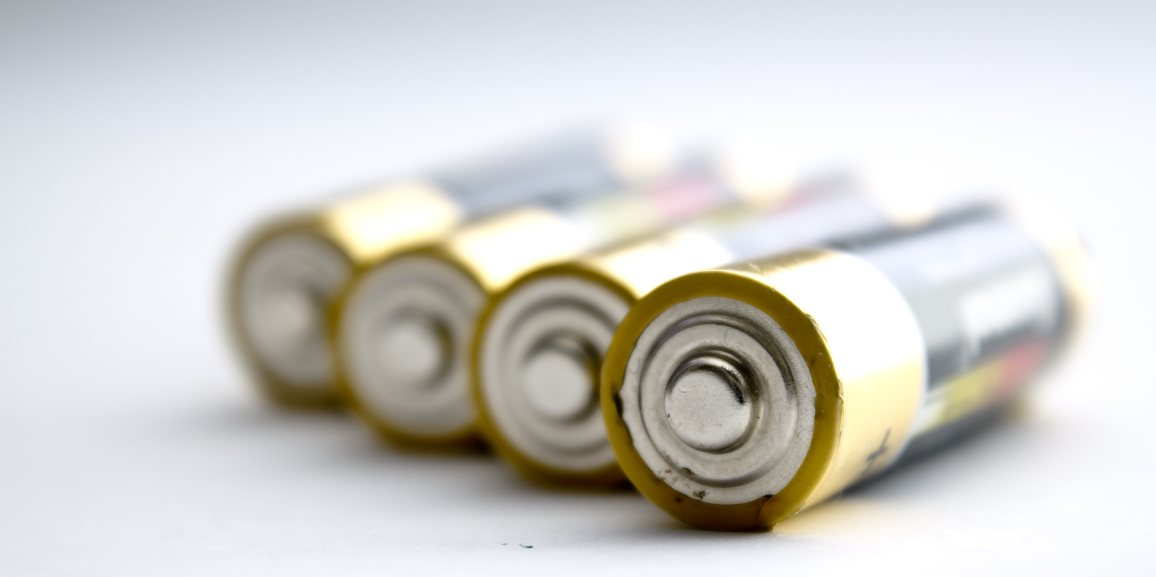
In 2020, more than 5,000 tonnes of batteries were bought in Denmark for music players, toys, tools, household appliances and many other products. When batteries reach end of life, we need to collect them and hand them in for recycling.
Incorrect sorting places a burden on the environment.
48% of the batteries sold are not collected correctly. Studies show that up to 38% disappear due to incorrect sorting. Put another way: for every two batteries that are sorted correctly, one battery is sorted incorrectly. In other words, we end up throwing batteries out with household waste or in small combustibles at recycling centres. The batteries are therefore incinerated, and we lose the opportunity to recycle many valuable materials from them.
These materials then have to be extracted instead, which places a heavy burden on the environment. Through the campaign “f***** med batterierne”, Elretur focuses on the importance of sorting batteries correctly.
You can hand in batteries at the recycling centre, and your municipality may also have provided environmental boxes where you can place old batteries for recycling. Some supermarkets have also set up containers for collecting batteries.
In Denmark, more than 2,600 tonnes of batteries were collected in 2020. That corresponds to a collection rate of 52%. That is good, but we need to become even better.
From the recycling centre, the batteries are transported to a facility in Denmark. Here they are manually sorted based on their chemical composition. Many different types of batteries are used in Danish households.
Button cell batteries: Approx. 35% are button cell batteries, which are used in items such as watches and toys.
Alkaline batteries: Alkaline batteries are used in items such as remote controls, torches and other electrical appliances.
Lithium-ion batteries: Lithium-ion batteries are typically used in mobile phones.
Once the batteries have been sorted, they are sent to specialised approved treatment facilities, for example in northern Germany, Finland, France and Poland. Here the batteries are separated into smaller fractions such as iron and plastic. After separation, the fractions are sent to smelting plants, where the iron is melted down for use in new products. In the process, a number of useful raw materials are also recovered, including lead, copper, nickel, manganese, cobalt, iron, brass, zinc and aluminium.
h3: The batteries are recycled into new products
We can currently recycle around 60% of old batteries. The materials recovered from them are used in items such as buildings, new electronics and cables. Recycling is much more environmentally responsible than extracting new raw materials. For example, we save 87% CO2 by recycling old steel.
Many raw materials are scarce resources, so it is important to recycle as much as possible and avoid sending batteries to incineration.
The non-recyclable parts of the batteries are incinerated in a way that prevents harmful substances from ending up in nature. Only a very small part - for example material from nickel-cadmium batteries - has to be landfilled in order not to harm the environment. Nickel-cadmium batteries are increasingly being phased out.