Retur and ERP Denmark warn: Current practice for business compensations opens the door to fraud
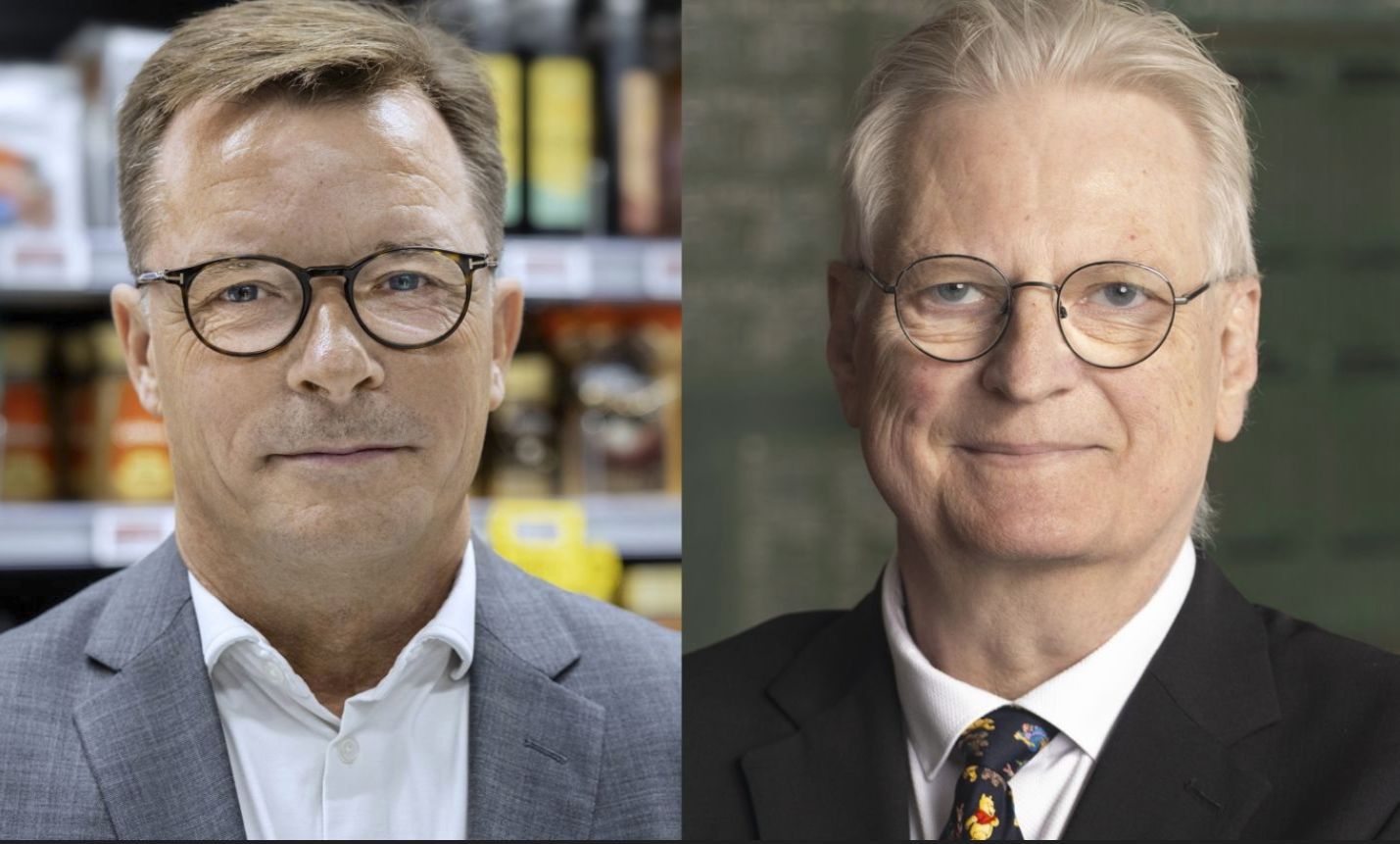
The planned practice for business compensations on packaging does not live up to the intentions of greater simplicity and less bureaucracy. This is the criticism from the two producer responsibility organisations Retur and ERP Denmark. They assess that the practice set out in the legislation opens the door to errors and abuse, and that the documentation requirements are not in line with the Bookkeeping Act.
A significant volume of packaging is used exclusively for commercial purposes and therefore does not end up as waste in the municipal system. Instead, the packaging is handled and settled separately by businesses with private operators.
Businesses that generate waste can apply for compensation for the packaging they themselves pay to dispose of via a so-called business compensation. The businesses concerned must apply for compensation from the producer responsibility organisations that handle the relevant waste fractions in the municipality where the businesses are registered.
In their analysis for the Ministry of Environment in 2021, COWI estimated that business compensations amount to DKK 850 million annually — a figure Retur regards as a minimum.
In efforts to reduce the administrative burden on businesses, the authorities are proposing a practice whereby it is sufficient to submit only an invoice number and amount, with no further documentation, when applying for business compensation.
To ensure compliance with the rules, spot checks will be carried out. But contrary to the intention, this practice leads to longer processing times and increased bureaucracy, because the producer responsibility organisations are compelled to request additional documentation in order to ensure correct payment of compensations.
"The documentation should at minimum meet the requirements of the Bookkeeping Act, so that it can be verified and audited. It does not do so today. In practice, this means we are performing a control task that is properly the responsibility of the authorities. It is costly, cumbersome, and time-consuming for all parties — but the alternative is that we pay out compensations blindly, and that would mean failing to live up to the mandate our members have given us," says Morten Harboe-Jepsen, CEO of Retur.
If producer responsibility organisations base their business compensation payments solely on the limited documentation requirements and authority spot checks, this will entail significant risk of errors and outright fraud.
At the less serious end, there may be unintentional errors where the applicant acts in good faith. But without adequate documentation and controls, there is no effective mechanism for detecting either errors or abuse - whether intentional or not. With total payments of at least DKK 850 million annually, this is a considerable sum to administer without the necessary safeguards.
"We have already seen examples of applications that did not hold up under closer scrutiny, and the input errors consistently favour the applicant. We therefore need a practice in which documentation is adequate and can be verified," says Torben Frahm, Country General Manager at ERP Denmark.
In autumn 2025, Retur's subsidiary organisation Emballageretur and ERP Denmark launched Affaldsanmodning.dk — a digital platform for applying for business compensations for businesses subject to producer responsibility for packaging.
When applications are submitted via Affaldsanmodning.dk, the process is relatively straightforward for businesses, and the producer responsibility organisations receive the necessary documentation.
"With Affaldsanmodning.dk, we are creating a single point of entry for all businesses that is simple and intuitive. At the same time, we gain a validation platform that ensures businesses are compensated correctly without the need to build a large administrative control apparatus," says Morten Harboe-Jepsen.
The solution is open to all producer responsibility organisations, and the remaining organisations have been invited to join. Emballageretur and ERP Denmark are calling on the authorities to recognise the platform as the basis for a shared documentation practice - to the benefit of businesses and organisations across the sector.
"If we achieve consensus, it will be a win for all parties," says Torben Frahm.
Just as private individuals can be end users of packaging, businesses' waste bins can also be the final destination for packaging waste — for example cardboard boxes, plastic film, or containers that become waste at the office, in the shop, or at the factory.
Unlike private individuals, where the municipality and producer responsibility settle automatically, businesses must actively request financial compensation. This is because businesses are free to choose whichever waste management arrangement they wish from the operators available on the market.
Business compensation is available to businesses that pay producer responsibility for packaging used exclusively for commercial purposes — that is, packaging that does not end up as household waste.
The purpose is to ensure that businesses do not pay twice for their packaging waste, if a business itself handles and pays for the disposal of its commercial packaging.
The business must be able to document that the information provided is correct — for example through invoices, contracts, or other relevant documentation.
If your business is entitled to business compensation, you must apply to the producer responsibility organisation that handles the relevant packaging fraction in the municipality where your business is registered (by p-number).
The fractions for which business compensation can be applied for are the following types of packaging waste:
Businesses must state:
Businesses must begin by registering as a user in the system and verifying with the business's MitID before applying for compensation.
If you wish for your waste collector to apply for compensations on the business's behalf, the business must set up a power of attorney in the system.
The business can choose between two types of power of attorney for the waste collector:
Access the system at www.affaldsanmodning.dk.
Retur is Denmark's largest family of collective producer responsibility organisations, helping businesses meet their statutory producer responsibility obligations in Denmark.
Retur comprises the producer responsibility organisations Elretur, Emballageretur, Batteriretur, Fiskeriretur, and Tekstilretur. Together, the organisations cover producer responsibility for electronics, packaging, batteries, fishing gear, and textiles.
Through these organisations, Retur supports thousands of businesses in managing their products and packaging when they become waste - from registration and reporting to practical handling. The aim is to ensure maximum reuse and recycling, and environmentally sound disposal where reuse is not possible.
Retur operates on a not-for-profit basis and draws on more than 20 years of experience in producer responsibility in practice. The organisation has access to specialised expertise and collaborates with Nordic and European producer responsibility organisations with a focus on supporting a more circular economy.
In 2025, Retur established Denmark's first reuse facility for electronics - Electronic Reuse and Recycling - in partnership with HJHansen Recycling, with a focus on reuse and preparing electronics for further recycling. Retur is also behind the information campaign "F*cker med batterierne" ("Messing with the Batteries"), featuring actress Bodil Jørgensen.
For more than 20 years, European Recycling Platform (ERP) in Denmark has helped businesses fulfil their producer responsibility obligations in the areas of electronics and batteries. In 2024, the organisation expanded to also cover packaging, single-use plastics, fishing gear, and textiles.
As a collective producer responsibility organisation, we give our customers confidence that all reporting requirements and statutory obligations are met - with minimal effort on the customer's part.
ERP Denmark has more than 1,400 customers in Denmark. We have offices in 18 countries and, as part of the global Landbell Group, we are a unique partner. We offer our customers a single point of contact across borders, access to value-adding knowledge and advice, and assurance that their waste is handled responsibly with a focus on maximum reuse and recycling.