How Retur sets our prices
Although producer responsibility organisations operate within the same legislative framework, their costs and prices may therefore differ.
Organisational structure, administration, choice of suppliers and partners, and the way financial fluctuations and risks are managed are among the factors that can affect prices.
Prices may therefore also develop differently from one organisation to another. A price change at one producer responsibility organisation does not necessarily indicate a similar price development at others.
At Retur, we base our prices on the actual costs of fulfilling producer responsibility obligations. As far as possible, our prices are based on known and documented costs, while we also work according to the principle that prices should be as stable and predictable as possible.
We therefore manage fluctuations over time rather than automatically passing temporary fluctuations on to our members. In our experience, this is the best solution for member companies when it comes to budgeting.
This does not mean that Retur's prices cannot change. It means that our prices should reflect the actual costs of fulfilling producer responsibility obligations, while we work to manage these obligations cost-effectively and provide our members with conditions that are as stable and predictable as possible.
When comparing prices across producer responsibility organisations, it is therefore important to look beyond the price itself. In this article, we explain what lies behind Retur's prices, how we have organised our activities, how we manage financial fluctuations, and how our prices are set.
When a company is subject to producer responsibility, this entails several specific tasks.
These include reporting, documentation, compliance checks, contract management, financial management, administration, advising partners and suppliers, communication, and the continuous development of systems.
A central part of producer responsibility is also the practical management of waste: collection and transport, sorting and treatment, including recycling and reuse. Equipment such as containers and cages must also be provided for collection.
Managing all of this is a substantial task for an individual company. Companies can therefore have these obligations managed by a producer responsibility organisation, which fulfils producer responsibility obligations on behalf of its member companies.
You can read more about this here and here.
Producer responsibility organisations are subject to many of the same requirements. They must comply with legislation, rules governing collection and treatment, and statutory contributions, as well as increasingly ambitious recycling targets.
Producer responsibility is a highly regulated area. Costs resulting directly from changes in legislation or other factors beyond the control of the individual producer responsibility organisation may therefore naturally affect the prices paid by companies.
However, the price of producer responsibility involves more than this. It is also affected by the choices made by each producer responsibility organisation regarding how it is structured and how it manages producer responsibility.
These factors may include:
Retur's producer responsibility organisations manage producer responsibility for packaging, electronics, batteries, textiles, fishing gear, and single-use plastics.
Rather than having a full administrative team for each producer responsibility organisation, we have functions such as member services, sustainability, finance, communication, data, quality assurance, and operations that work across our producer responsibility areas. This enables us to share employees, specialist expertise, and IT systems and thereby benefit from economies of scale across the organisation.
This way of organising our activities is based on more than 20 years of experience. Retur's first producer responsibility organisation, Elretur, has worked according to the same fundamental principles for pricing and financial risk management since 2005. We apply this experience across Retur's producer responsibility areas.
At the same time, we work with a small number of carefully selected partners, some of whom we have worked with since Elretur was established. The number of suppliers affects costs because a larger number of suppliers, agreements, and business relationships requires more resources for administration and follow-up.
For packaging, we have six suppliers for collection and treatment. This is a deliberate choice in how we have organised the task. Other producer responsibility organisations may have a hundred suppliers or more, while some have no collection suppliers at all because their market shares are so small that they are not required to handle collection themselves.
The number of suppliers does not in itself indicate which model is best or least expensive. But it does affect how the organisation needs to be structured. More suppliers mean, for example, more agreements, more coordination, more follow-up, and more relationships to manage.
Conversely, a model with fewer suppliers may place different demands on the organisation's own operations and structure.
At Retur, pricing is based on actual costs and on upcoming costs that we are aware of in connection with managing producer responsibility.
When setting our prices, we consider, among other things, the costs of collecting, transporting, treating, and recycling the relevant waste volumes, as well as Retur's own administrative costs. Costs relating to municipalities and business compensation also account for a significant share of the total costs.
The total amount paid by companies is also affected by the key figures and allocation mechanisms established by legislation, including payments to DPA and costs associated with eco-modulation.
A fundamental principle of Retur's pricing is that, as far as possible, we base our prices on known and documented costs. Our many years of experience have shown that legislation and regulations can change.
We therefore set our prices based on the legislation currently in force and, as a rule, do not factor in anticipated future price increases or costs that have not yet been determined.
Once the actual costs are known, they can be incorporated into subsequent pricing. We do not want to charge more than necessary or charge in advance for costs that have not yet been determined.
A producer responsibility system is not static. Allocations may vary, waste volumes may develop differently than expected, and costs for areas such as collection and treatment may change from year to year.
We therefore look not only at what things cost here and now, but also at how best to manage the fluctuations and risks associated with producer responsibility.
Through more than 20 years of experience with producer responsibility, we have seen that financial results can fluctuate from year to year. We therefore apply a principle across all Retur's producer responsibility organisations of building financial reserves that can act as a buffer when costs develop differently than expected.
This principle has been decided by the boards on behalf of the members and means that each producer responsibility organisation must maintain a financial buffer that enables it to manage fluctuations and risks over time. Among other things, we factor allocation risk into our pricing. This means that a fluctuation in a single year does not necessarily have to result in a corresponding price increase for members.
This does not mean that prices can never change. But we do not want to pass anticipated or temporary fluctuations directly on to companies before we know the actual costs.
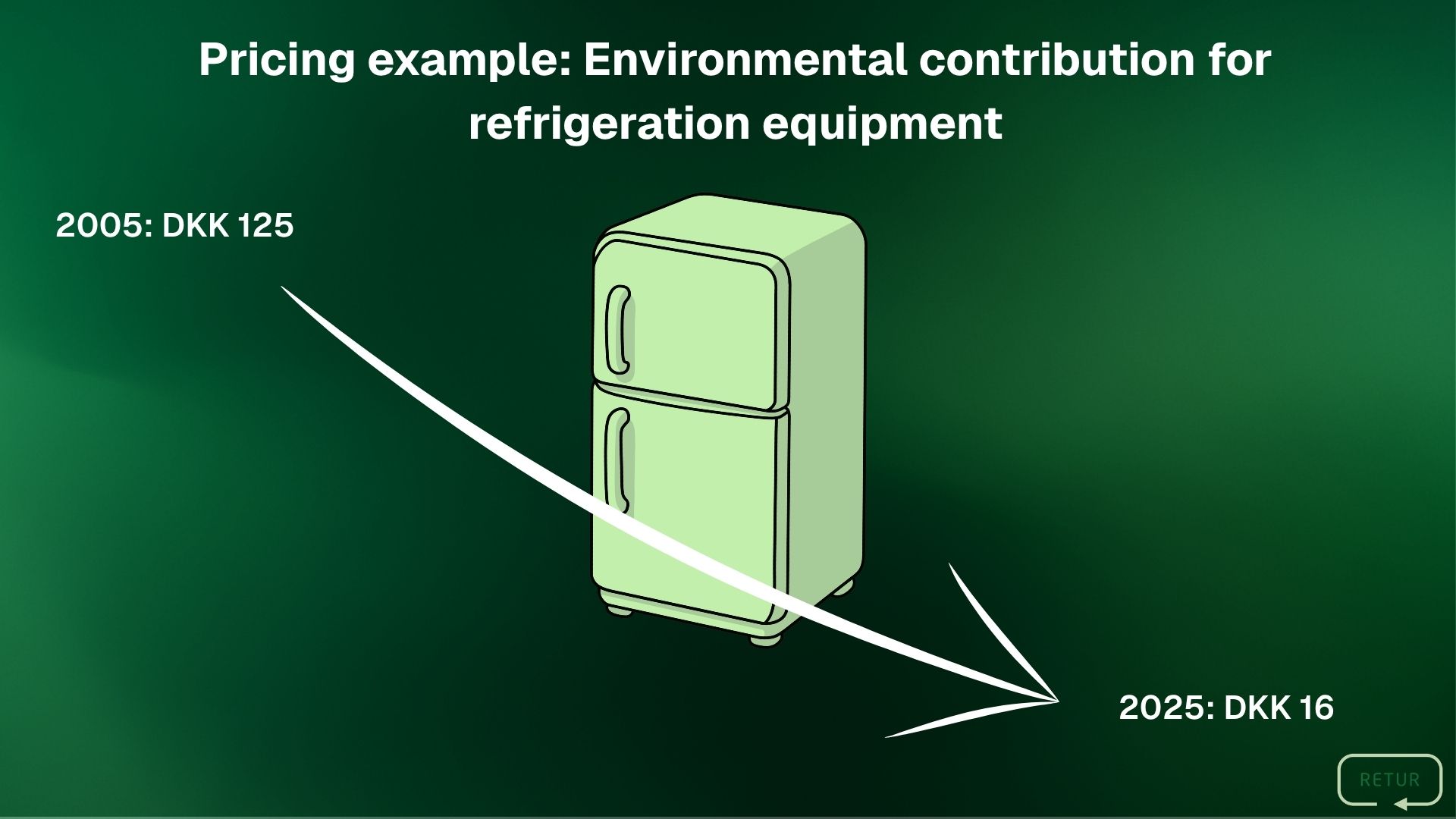
A specific example of how experience and continuous development can affect costs is the handling of refrigerators. We have continuously developed and improved the efficiency of how we manage this task. Among other things, this has reduced the cost of handling a refrigerator from DKK 125 in 2005 to DKK 16 in 2025.
The example shows that costs depend not only on what a task costs at a given point in time, but also on how the task is carried out and how, over time, experience is built and more efficient ways of managing producer responsibility are developed.
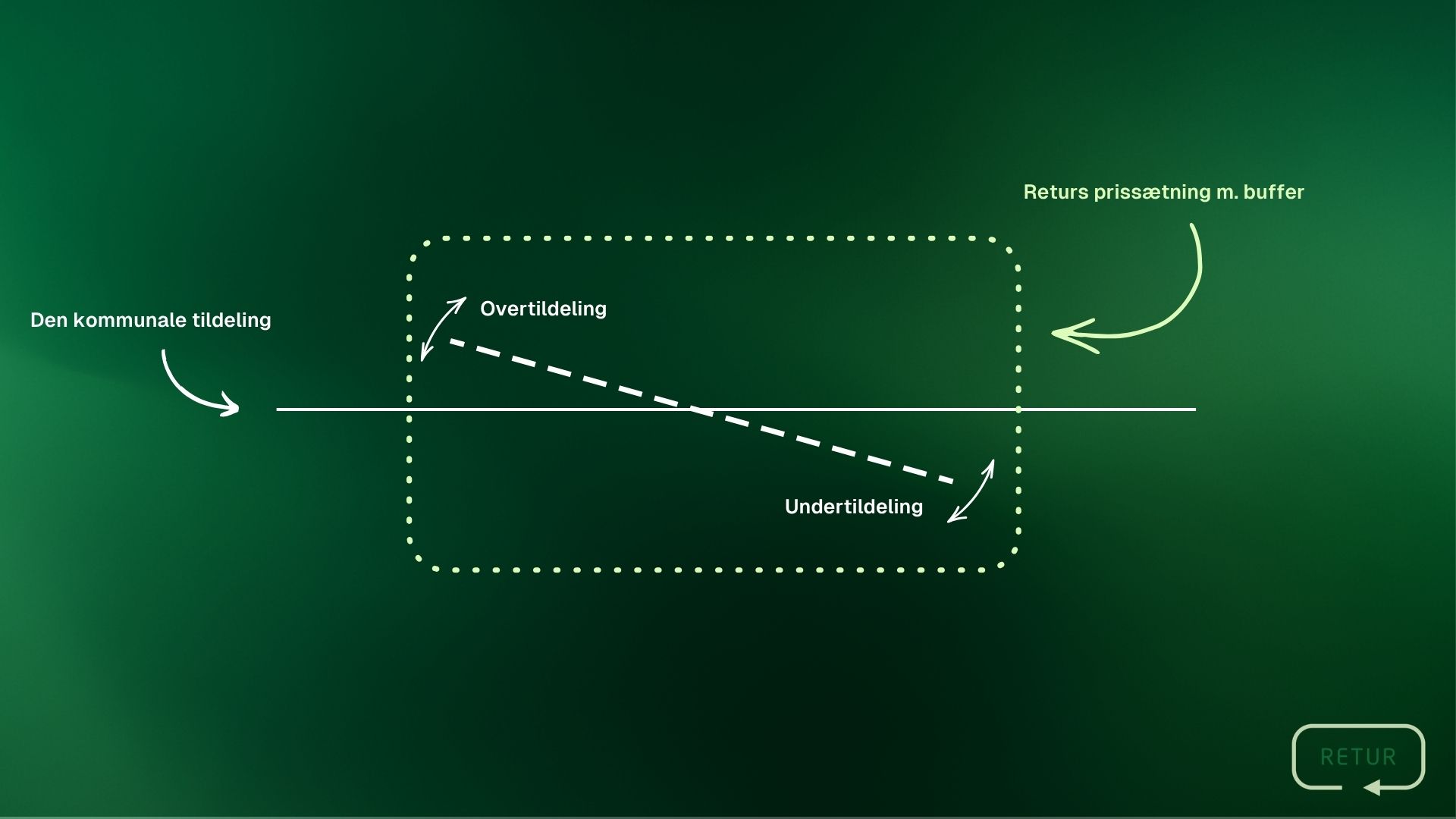
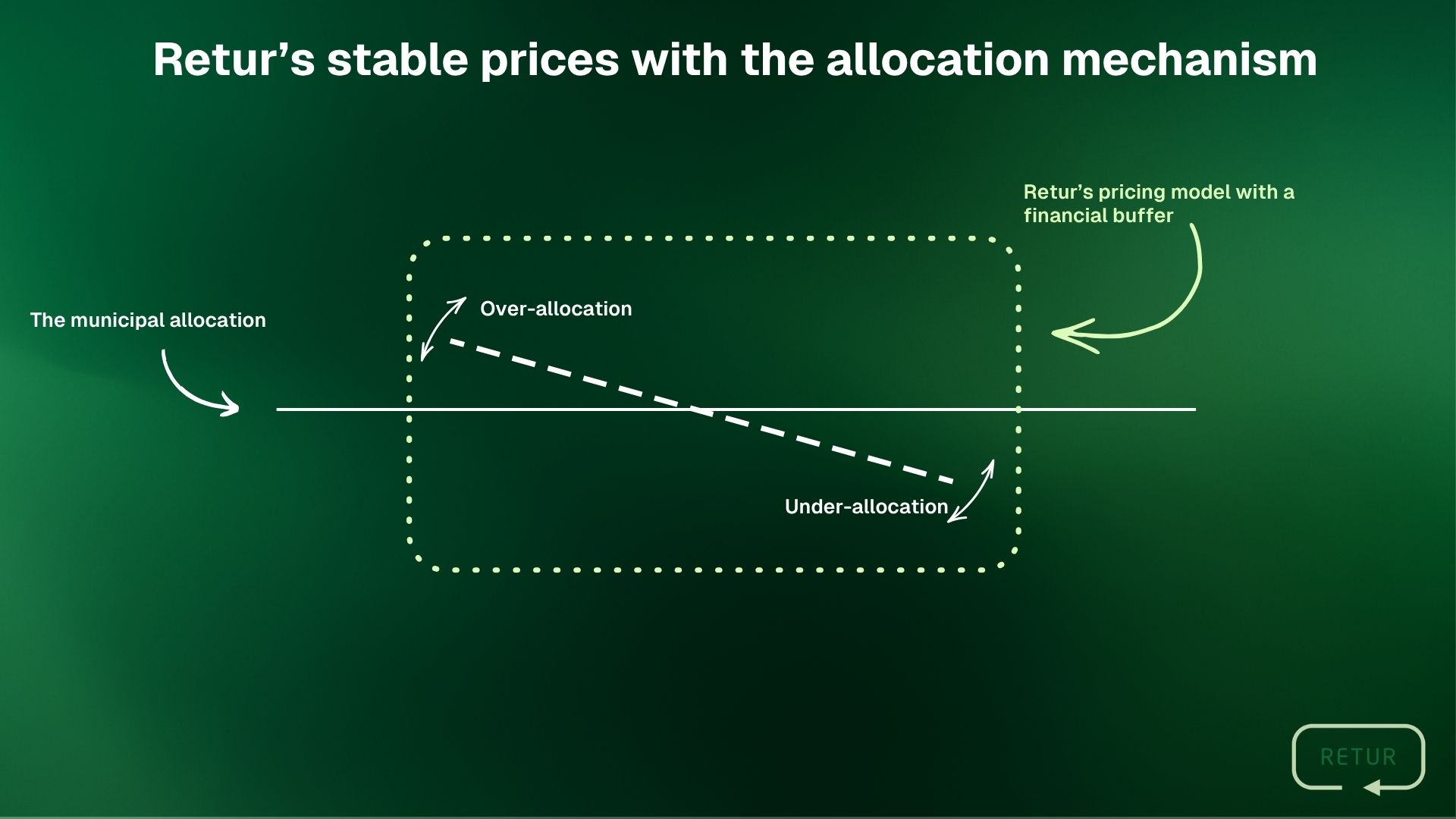
The municipal allocation of packaging waste to producer responsibility organisations is a good example of why costs can fluctuate.
The allocation determines the volumes of waste that a producer responsibility organisation must help collect and therefore finance. If an organisation is allocated more or less waste than expected, this may affect its costs.
We have previously explained in more detail what over-allocation and under-allocation mean and how allocation can affect prices.
However, allocation is only one of the factors included in overall pricing. It is therefore not only the allocation itself that affects the price, but also how each producer responsibility organisation manages the financial risk associated with it.
An important element of pricing is that each producer responsibility organisation bears the financial consequences of fluctuations in its own operations.
If, for example, Emballageretur is over-allocated packaging waste for collection in a given year, it is Emballageretur's finances that are affected. The cost of the over-allocation is not distributed among Retur's other producer responsibility organisations or other producer responsibility organisations in the market.
Conversely, they do not share in any financial benefit if Emballageretur incurs lower costs as a result of under-allocation.
This means that fluctuations in one producer responsibility organisation do not automatically affect the finances and prices of another. This is important to bear in mind when comparing prices across producer responsibility organisations.
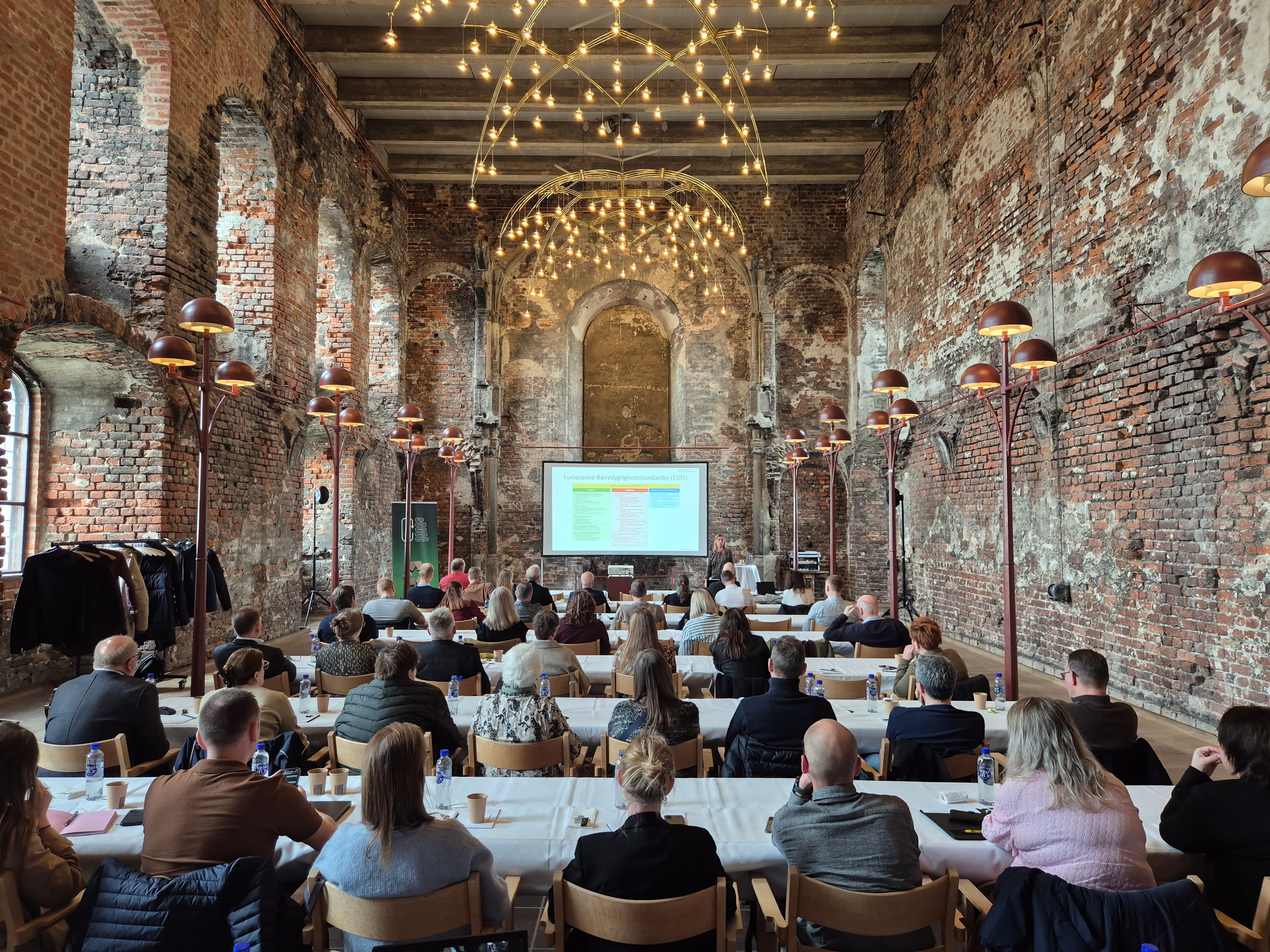
Retur is the only producer responsibility organisation organised as a member democracy. This means that our members are not simply customers of a producer responsibility organisation, but co-owners who, through section committees and boards, have a say in how the organisation is run.
This also applies to pricing. Based on expected costs, Retur prepares a proposed price structure for each producer responsibility area. The proposals are discussed and refined together with member companies, which, through the section committees, help recommend the prices. The final price is then set by the board of the individual producer responsibility organisation.
This means that pricing is not simply a matter of what the administration considers to be the right price. Members are involved in the process and have the opportunity to gain insight into the financial position and considerations behind the price proposal before the final price is set by the board.
Although we aim for stable pricing, Retur's prices can of course change.
If legislation results in new costs, if the statutory costs of municipal collection and waste management change, if requirements for reuse and recycling increase, or if other factors beyond our control make it more expensive to fulfil producer responsibility obligations, this may affect our prices.
However, a change in costs at one producer responsibility organisation does not automatically result in the same price development at others. Producer responsibility organisations have different cost structures, organisational models, and approaches to managing fluctuations, and their prices may therefore develop differently.
At Retur, we work according to the principle that prices should be as stable and predictable as possible while reflecting the actual costs of fulfilling producer responsibility obligations. We also aim to set and announce our prices well in advance, giving our members as clear a basis as possible for budgeting and enabling them to factor the costs of producer responsibility into their budgets for the coming year.
The principle works both ways. If costs fall, or if a producer responsibility organisation builds up a surplus over time, this should also benefit the members. This may mean keeping prices unchanged for an extended period even if prices in society more generally are rising or reducing prices.
The aim is not to promise that prices will never change, but to provide our member companies with conditions that are as stable and predictable as possible and a fair and transparent price for the producer responsibility obligations we fulfil on their behalf. At the same time, we work to fulfil these obligations as cost-effectively as possible while achieving the highest possible levels of reuse and recycling.