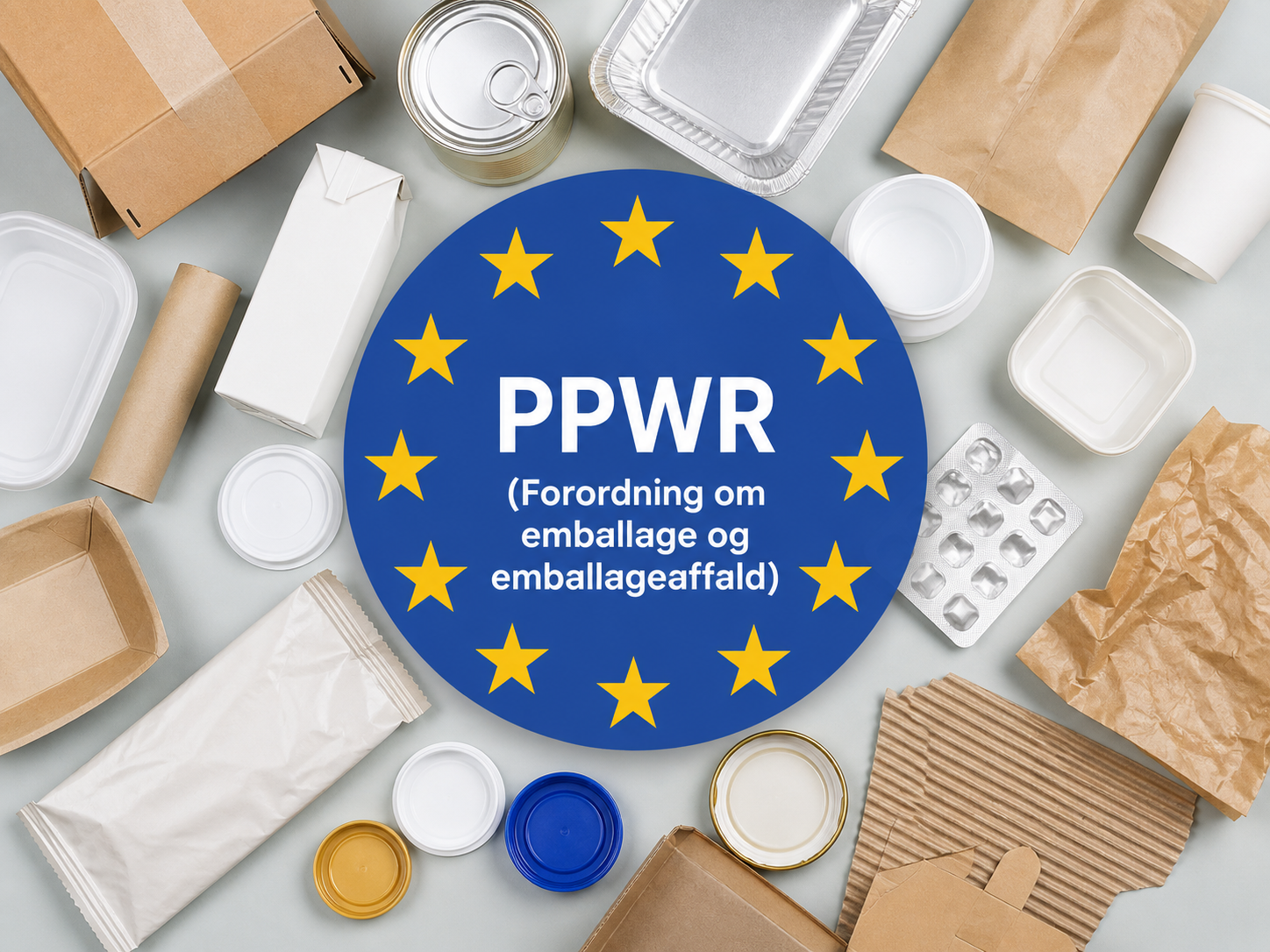
PPWR makes packaging requirements more uniform across the EU
The EU Packaging and Packaging Waste Regulation (PPWR) is a binding set of rules that introduces common European requirements for packaging design, minimisation, recyclability and the use of recycled content, with the aim of reducing packaging waste across EU Member States.
The PPWR replaces the previous Packaging Directive and is a regulation. This means that the rules will to a greater extent be common across Member States, instead of each country transposing the directive in its own way. For companies operating across markets, this provides a more consistent framework to navigate.
The regulation is being implemented gradually, and several of the requirements companies already encounter in their work with packaging are closely linked to the development of the PPWR. It is therefore not only a future EU agenda, but something that is already affecting how companies should work with packaging data, documentation and design.
Six areas to pay particular attention to
Design for recycling
Packaging must increasingly be designed so that it can be effectively recycled in practice. The requirements will gradually become stricter towards 2030.
Recycled content
Plastic packaging in particular will be subject to requirements for the share of recycled material. This is intended to reduce the use of virgin raw materials and strengthen demand for recycled materials.
Less and more efficient packaging
Companies must work more systematically to reduce the weight and volume of packaging and avoid unnecessary packaging.
Reuse systems
The regulation introduces requirements and targets for reuse for selected packaging types and sectors, including transport packaging, e-commerce and takeaway.
Harmonised labelling
Common EU labelling will be introduced to make correct sorting easier and create greater consistency across markets.
Substances of concern
The PPWR also sets requirements for substances in packaging and restricts the use of certain problematic chemical substances.
The PPWR will have implications deep into the value chain
The PPWR means that packaging must increasingly be documented and justified - not only in relation to weight and material, but also in relation to design, function, recyclability, traceability and contents. The requirements are therefore moving from being a pure compliance issue to also being a matter of supplier management, market access and strategic packaging choices.
For many companies, this means that packaging data becomes more important, that requirements for documentation and supplier dialogue increase, and that packaging choices must increasingly be able to withstand scrutiny across the entire value chain. Importers and distributors must also ensure that the packaging they market meets the requirements.
The PPWR and EPR point in the same direction
The PPWR and EPR are not the same, but they are closely linked. EPR concerns the organisation, financing and management of packaging waste, while the PPWR places greater emphasis on the design, properties and documentation of the packaging itself.
In practice, however, the two tracks meet. Requirements for recyclability, documentation, traceability and material choices mean that packaging design will increasingly affect compliance, economics and market access.