Textile waste has several pathways but only a few become new fibres
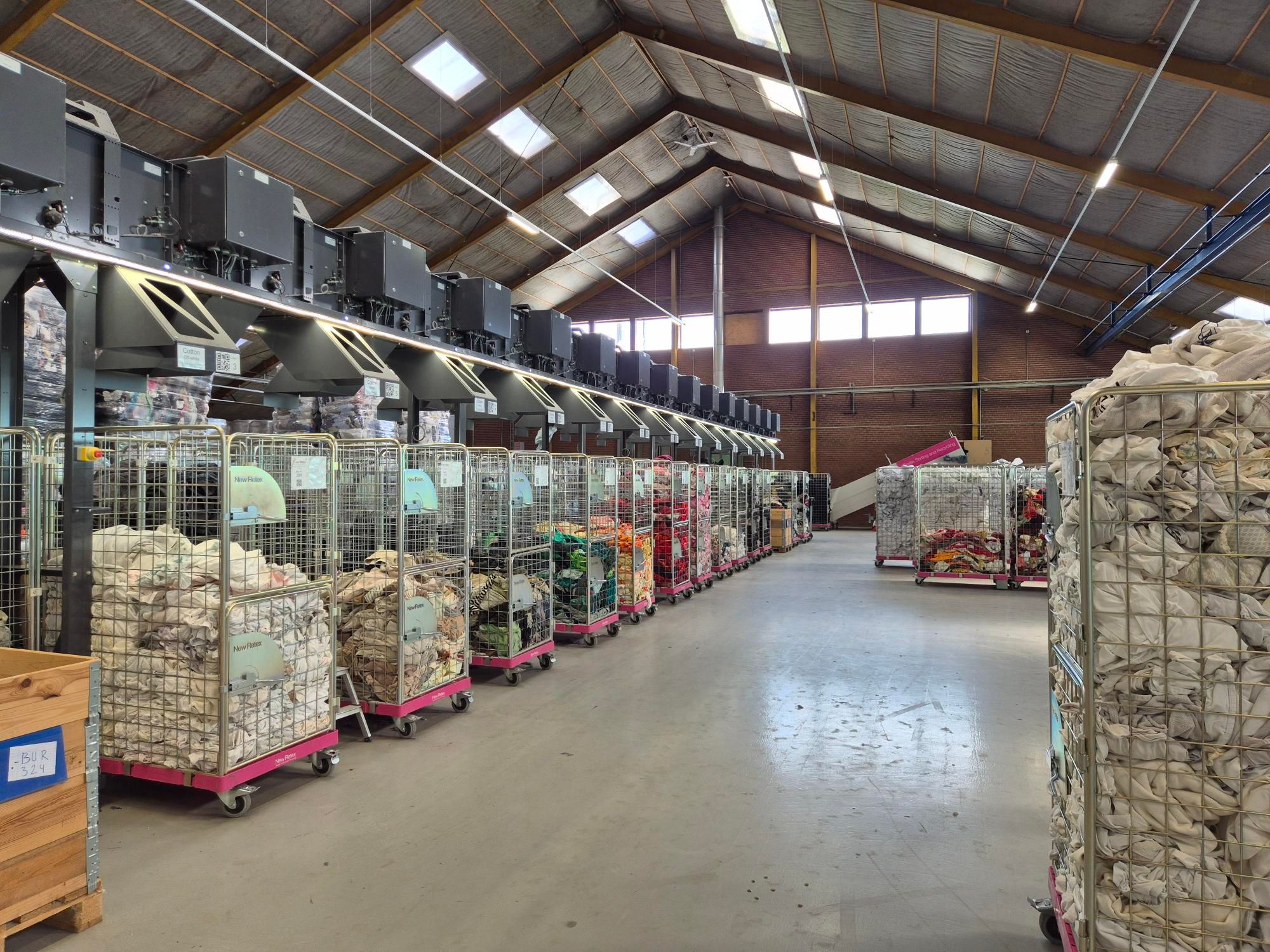
NewRetex is a Danish company operating a textile sorting facility in Bjerringbro. The company’s technology receives textile waste and sorts it for mechanical recycling. Mechanical recycling is the process of recycling fibres through mechanical processes without the use of chemicals.
NewRetex has been developing its operations over several years, evolving from a start-up through a pilot facility to a fully operational plant.
The facility in Bjerringbro currently receives 2,500 tonnes of textile waste per year. Its sorting facility on site has a capacity of 4,200 tonnes per year on a single line. This line is fed with non-reusable textile waste, and NIR scanners sort the textiles by colour and fibre composition, primarily cotton and cotton/polyester blends.
During Tekstilretur’s visit, the line was sorting into 31 fractions, but the technology on the line is capable of identifying 59 fractions. This means that the sorting can be adjusted according to what there is demand for in the market.
NewRetex highlights that an advantage of the facility is that there is neither significant noise nor dust in the process, resulting in a better working environment when avoiding blowing the textiles out during the sorting process.
NewRetex has also commissioned tests of yarns, fabrics and other textile products to assess how recycled textile fibres can be used in new products and to evaluate their quality. They are working to sell their sorting technology to other countries.
Approximately 20% of the received quantities of textile waste from the municipalities can be sorted for mechanical fibre-to-fibre recycling. A further 20% could be recycled through chemical recycling.
40% of the textile waste is rejected because it is not suitable for reuse or recycling. This may be because it is wet or contaminated, consists of multilayer textiles, or because the textiles are unsuitable for recycling for other reasons.
Today, NewRetex collaborates with half of the country’s municipalities on textile waste.
NewRetex has, however, chosen to embrace a larger part of the value chain and has recently also begun manually sorting reusable textiles, so that they do not end up in the stream for recycling.
Reuse is higher up in the waste hierarchy, and therefore there is an obligation to attempt to reuse textiles that can be reused. Reuse also generally represents a positive economic value in textile waste.
The visit to NewRetex was part of the Nordic PRO collaboration, in which we work across Denmark, Norway and Sweden to prepare the best possible framework for the treatment of textile waste under extended producer responsibility.