The upcoming Extended Producer Responsibility (EPR) requirements for textiles will cover far more than traditional clothing. Clothing, home textiles, footwear and certain leather products will be part of the scheme. Here, you get an overview of the product scope that companies should already begin to consider.
The exact Danish product list has not yet been defined. But the starting point is already clear: textile EPR will not only cover clothing, but a broad product scope within textiles, footwear and related products.
This means that many companies outside traditional fashion should also start reviewing their product range already now. Below, you get an overview of the product categories that are already relevant to have on your radar.
Articles of clothing and clothing accessories, home textiles such as carpets, throws, bed linen and towels, curtains and other home textiles, as well as headwear, will be part of the product scope.
Footwear is an independent and central part of the scheme. All types of footwear are expected to be covered, including footwear with textile uppers, footwear made of leather or imitation leather, and footwear made of rubber and plastic.

Certain items of clothing and accessories made of leather or imitation leather will also be covered. This makes the scheme relevant for companies that do not necessarily see themselves as textile companies.
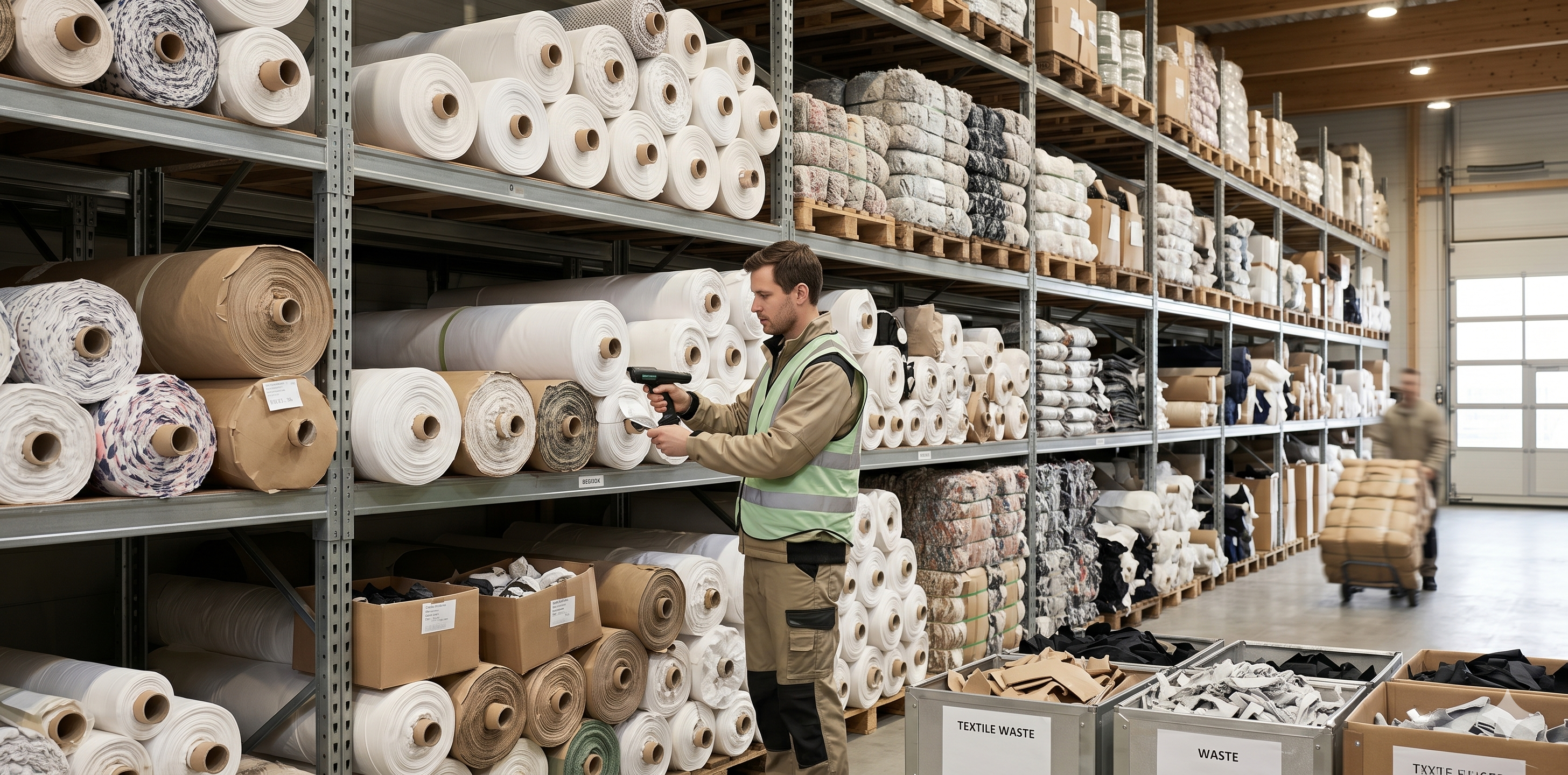
Many companies outside traditional fashion will also be affected by the scheme. This includes companies with workwear and uniforms, sportswear and outdoor clothing, bags, hats, interior textiles for hotels and offices, and certain technical textiles.
What matters is not the industry in which the product is sold. What matters is whether the product falls within the defined product scope.
EPR requirements may also be introduced for mattresses as part of the national implementation. This has not yet been confirmed, but it is relevant to include in your preparations if your company operates in that market.
Tekstilretur follows developments closely and will keep you updated if mattresses become part of the Danish scheme.

It is not always easy to determine which products fall within the upcoming scheme - especially if your product range spans several categories or crosses textiles and footwear.
Tekstilretur provides guidance on how you can map your product range and identify which parts of your product catalogue you should already start preparing for.
In practice, the technical definition of the products will follow the Combined Nomenclature (CN) codes set out in the national executive order. For many companies, the first major preparation task will therefore be to map their own product catalogue against the new categories and identify which item numbers fall within the scheme.
While we wait for the executive order, customs codes can be used to assess whether a product is covered by EPR or not. Tekstilretur will make guidance and tools available once the rules are in place.